 Log in

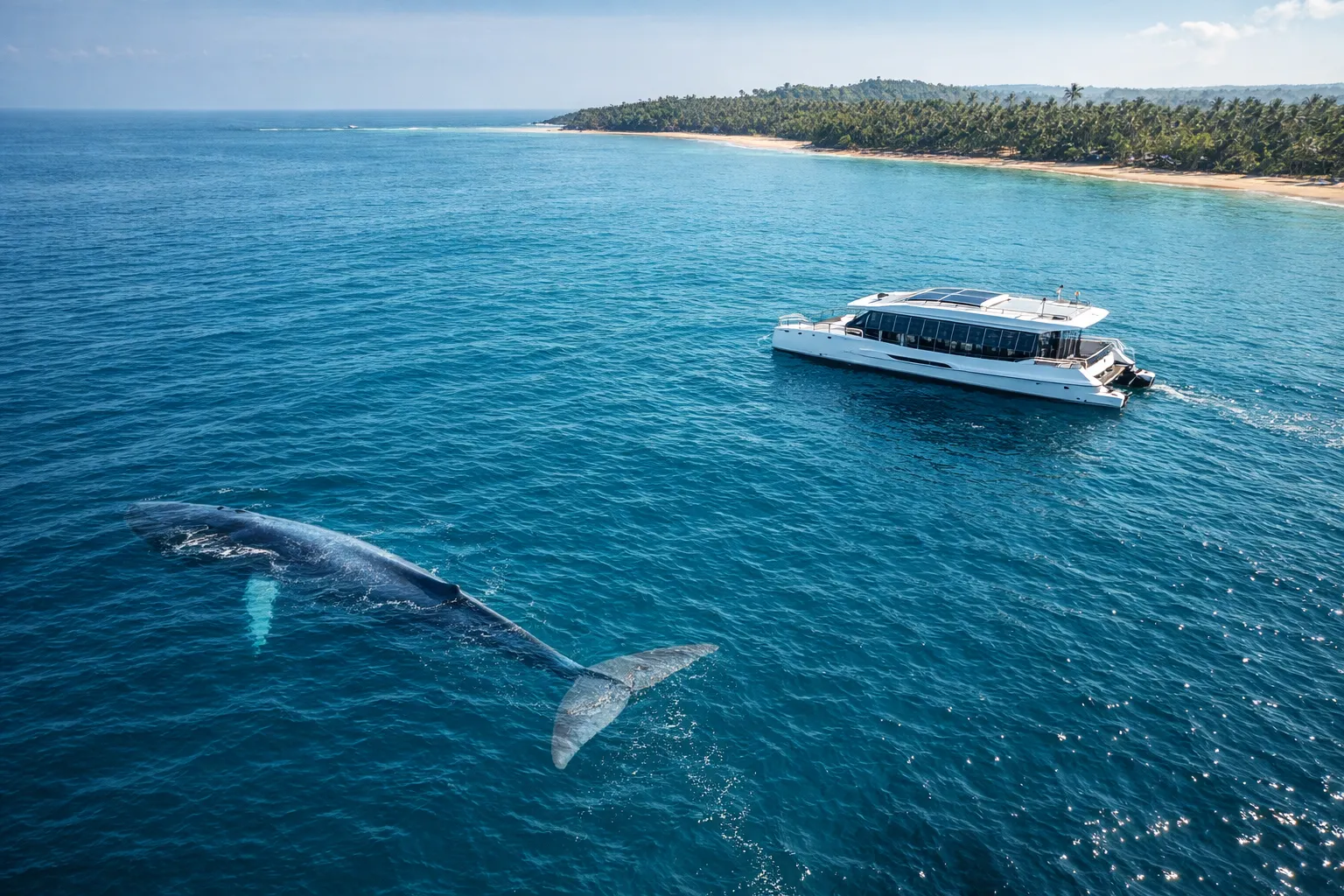
New Sustainability Protocols for Mirissa Whale Watching Effective January 2026.
28-Jan-2026
Protecting the Giants: Sri Lanka’s 2026 Marine Sanctuary Protection Act
As of January 15, 2026, the coastal waters of Mirissa have officially entered a new era of environmental stewardship. Under the Marine Sanctuary Protection Act, the Department of Wildlife Conservation (DWC) has designated key migratory corridors as highly regulated zones. This move is part of Sri Lanka's broader "30-by-30" initiative—a global commitment to protect 30% of marine territory by 2030—positioning the island as a leader in ethical wildlife tourism.
The New "No-Wake" Zone Regulations
For travelers booking Mirissa whale watching tours this season, the most significant change is the implementation of mandatory "No-Wake" zones. These zones, located approximately 15 to 20 nautical miles off the southern coast, require all vessels to maintain a speed of under 5 knots when within a 500-meter radius of a sighted whale. This reduces acoustic pollution, which has historically interfered with the communication and breeding patterns of the Blue Whale and Sperm Whale.
Mandatory Vessel Certification
In a move to phase out older, noise-heavy trawlers, the DWC now requires all commercial tour operators to utilize Eco-Certified Vessels. These boats must pass rigorous inspections regarding engine decibel levels and waste management systems. Operators like GoSriLanka are already transitioning to silent-propulsion or hybrid-electric yachts to ensure guests enjoy a serene, respectful encounter with marine life without compromising on luxury.
Enhanced Sighting Guidelines
The 2026 protocols also strictly enforce the "Caution Zone" rules:
- 300m Caution Zone: No more than three vessels are permitted within 300 meters of a whale at any given time.
- 100m No-Approach Zone: Head-on approaches and "chasing" behaviors are strictly prohibited and monitored via Coast Guard drone surveillance.
- Naturalist Requirement: Every licensed vessel must now have a DWC-certified naturalist on board to provide educational commentary and ensure compliance.
Frequently Asked Questions (2026 Season)
- Is whale watching still available in Mirissa in 2026? Yes, whale watching remains a premier attraction. However, tours are now more regulated to ensure the long-term survival of the species. We recommend booking in advance as vessel capacity is strictly monitored under the new quota system.
- When is the best time to visit Mirissa under the new laws? The peak season remains January through April. The new 2026 regulations have actually improved sighting consistency, as whales are less distressed by heavy vessel traffic.
- How do these rules affect the price of tours? While the mandatory conservation levy and the cost of eco-friendly technology have slightly increased ticket prices, the quality of the experience has improved significantly. Guests can expect smaller crowds and a much more intimate, quiet environment during sightings.

-
 18- March-2026Flyselskaper utvider direkte- og mellomlandingsruter fra Europa til Sri Lanka i 2026
 -
 13- March-2026Norwegian Interest in Traveling to Sri Lanka Rising in 2026 as Demand for Tropical Holidays Grows
 -
 11- March-2026Sri Lanka har passert 600 000 turister i 2026 til tross for treg start i mars
 -
 06- March-2026Sri Lanka Offers Free 14-Day Visa Extension for Stranded Tourists Amid Middle East Flight Disruptions
